Healthcare Store
Browse premium healthcare products with worldwide shipping, secure checkout and discreet packaging.
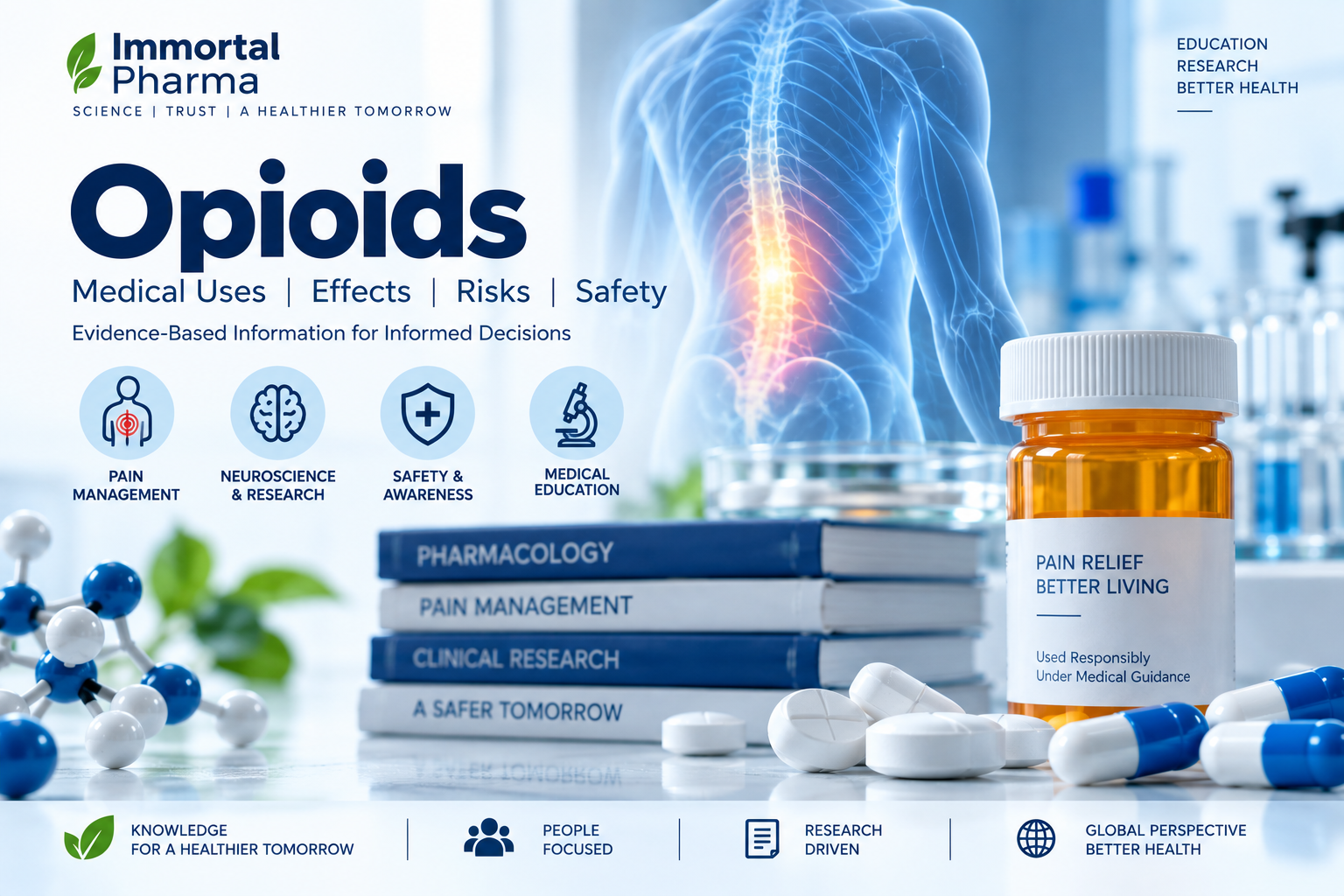
Opioids
Our Products
17 products found











Opioids
<div class="category-description">
<h2>Opioids: Educational Information, Medical Uses, Effects & Safety</h2>
<p><strong>Opioids</strong> are a class of substances that interact with specific opioid receptors in the nervous system and can influence pain perception, breathing, mood, and other physiological functions. Some opioids are important prescription medicines used in clinical settings for the management of certain types of moderate to severe pain. Other opioid substances have been investigated in pharmacology, neuroscience, toxicology, and pharmaceutical research.</p>
<p>Although opioids can have legitimate medical applications, they also carry significant risks. These risks can include sedation, impaired judgment, slowed breathing, physical dependence, tolerance, and opioid use disorder. The effects and risks vary according to the specific opioid, the person's health, other medicines or substances involved, and whether the substance is being used under appropriate medical supervision.</p>
<h2>How Do Opioids Work?</h2>
<p>Opioids produce their primary effects by interacting with <strong>opioid receptors</strong> located in the brain, spinal cord, and other parts of the body. These receptors are involved in pain signaling, emotional responses, and several automatic physiological processes.</p>
<p>When an opioid activates these receptors, it can reduce the perception of pain and may also produce sedation or changes in mood. Opioid receptor activity can also affect respiratory function, which is one of the most important safety concerns associated with this class of substances.</p>
<h2>Medical Uses of Opioids</h2>
<p>Certain opioid medicines have established medical uses, particularly for pain management in specific clinical circumstances. Healthcare professionals may consider opioid therapy when the expected medical benefits outweigh the potential risks. Treatment decisions depend on the patient's condition, medical history, other medications, and the availability of alternative approaches.</p>
<p>Some opioids may also have specialized medical applications depending on the individual compound and local regulatory framework. Because opioids differ considerably in potency, duration of action, formulation, and pharmacological properties, information about one opioid should not automatically be applied to another.</p>
<ul>
<li>Management of certain types of acute pain</li>
<li>Selected cases of severe or persistent pain</li>
<li>Specific medical and palliative-care applications</li>
<li>Pharmacological and clinical research</li>
<li>Research into pain pathways and opioid receptors</li>
</ul>
<h2>Effects of Opioids</h2>
<p>The effects of opioids can involve both the central nervous system and other organs. Their effects depend on the particular compound and individual circumstances. Therapeutic effects can include reduced pain perception, while unwanted effects may affect alertness, coordination, digestion, and breathing.</p>
<ul>
<li>Reduced perception of pain</li>
<li>Drowsiness or sedation</li>
<li>Changes in alertness and concentration</li>
<li>Nausea or vomiting</li>
<li>Constipation</li>
<li>Dizziness or impaired coordination</li>
<li>Changes in mood or emotional state</li>
<li>Slowed breathing, particularly with excessive exposure or dangerous combinations</li>
</ul>
<h2>Opioid Dependence and Tolerance</h2>
<p>Repeated exposure to opioids can lead to <strong>tolerance</strong>, meaning that the body may respond differently over time. Physical dependence can also develop, so suddenly stopping an opioid after regular use may result in withdrawal symptoms. Physical dependence and opioid use disorder are not identical concepts, although dependence can occur as part of opioid use disorder.</p>
<p>Opioid use disorder is a medical condition involving problematic opioid use that can lead to significant impairment or distress. It can affect people who have been exposed to opioids in different circumstances, and it should be approached as a health condition rather than simply a matter of personal choice.</p>
<h2>Potential Risks and Side Effects</h2>
<p>Opioids have important safety considerations because their effects can extend beyond pain relief. One of the most serious risks is <strong>respiratory depression</strong>, in which breathing becomes dangerously slow or ineffective. This risk can increase when opioids are combined with other substances that cause sedation or suppress the central nervous system.</p>
<ul>
<li>Respiratory depression</li>
<li>Severe drowsiness or loss of alertness</li>
<li>Constipation and gastrointestinal problems</li>
<li>Nausea and vomiting</li>
<li>Dizziness and impaired coordination</li>
<li>Confusion or changes in mental state</li>
<li>Physical dependence and withdrawal</li>
<li>Risk of opioid use disorder</li>
</ul>
<h2>Opioid Interactions and Safety</h2>
<p>Interactions are an important consideration when evaluating opioid medicines. Combining opioids with other sedating substances can increase the risk of excessive sedation and respiratory problems. Certain prescription medicines, alcohol, and other central nervous system depressants may contribute to dangerous interactions.</p>
<p>Patients prescribed an opioid should provide their healthcare professional with a complete list of medicines, supplements, and other substances they use. Medical professionals can then evaluate potential interactions and determine appropriate treatment and monitoring.</p>
<h2>Opioids in Pharmaceutical and Scientific Research</h2>
<p>Opioids continue to be studied in neuroscience, pharmacology, pain medicine, and drug-development research. Researchers investigate opioid receptor biology, mechanisms of pain transmission, therapeutic effectiveness, adverse effects, dependence, withdrawal, and strategies for developing safer pain-management approaches.</p>
<p>Research into opioid pharmacology has contributed substantially to understanding how pain signals are processed within the nervous system. Current research also examines ways to preserve clinically useful analgesic effects while reducing risks associated with respiratory depression, dependence, misuse, and other adverse outcomes.</p>
<h2>Understanding Opioid Safety</h2>
<p>Opioids should be understood as pharmacologically active substances rather than simply as pain medicines. Their benefits and risks can vary significantly between individual compounds and clinical situations. Appropriate prescribing, patient assessment, monitoring, and professional guidance are important components of safe medical use.</p>
<p>Information about opioids should also distinguish between controlled medical treatment, pharmaceutical research, and non-medical use. Evidence from a clinical study does not mean that unsupervised use of an opioid is safe or appropriate.</p>
<h2>Key Points About Opioids</h2>
<ul>
<li>Opioids are a diverse class of substances that act on opioid receptors.</li>
<li>Some opioids have established medical applications, particularly in pain management.</li>
<li>Opioids can cause sedation, constipation, nausea, dizziness, and other adverse effects.</li>
<li>Respiratory depression is one of the most serious opioid-related risks.</li>
<li>Repeated exposure can result in tolerance and physical dependence.</li>
<li>Opioid use disorder is a treatable medical condition.</li>
<li>Interactions with other sedating substances can increase safety risks.</li>
<li>Opioids remain an important subject of pharmaceutical, medical, and neuroscience research.</li>
</ul>
<h2>Conclusion</h2>
<p><strong>Opioids</strong> are an important category in modern medicine and pharmacology, with established applications in pain management and ongoing research into their mechanisms and safety. At the same time, their effects on respiratory function, dependence, tolerance, and other physiological systems make responsible medical use particularly important. Understanding <strong>opioid effects, medical uses, side effects, risks, dependence, drug interactions, and pharmaceutical research</strong> can help readers develop a more accurate understanding of this complex class of substances. Medical decisions involving opioid medicines should always be made with guidance from a qualified healthcare professional.</p>
</div>
<h2>Opioids: Educational Information, Medical Uses, Effects & Safety</h2>
<p><strong>Opioids</strong> are a class of substances that interact with specific opioid receptors in the nervous system and can influence pain perception, breathing, mood, and other physiological functions. Some opioids are important prescription medicines used in clinical settings for the management of certain types of moderate to severe pain. Other opioid substances have been investigated in pharmacology, neuroscience, toxicology, and pharmaceutical research.</p>
<p>Although opioids can have legitimate medical applications, they also carry significant risks. These risks can include sedation, impaired judgment, slowed breathing, physical dependence, tolerance, and opioid use disorder. The effects and risks vary according to the specific opioid, the person's health, other medicines or substances involved, and whether the substance is being used under appropriate medical supervision.</p>
<h2>How Do Opioids Work?</h2>
<p>Opioids produce their primary effects by interacting with <strong>opioid receptors</strong> located in the brain, spinal cord, and other parts of the body. These receptors are involved in pain signaling, emotional responses, and several automatic physiological processes.</p>
<p>When an opioid activates these receptors, it can reduce the perception of pain and may also produce sedation or changes in mood. Opioid receptor activity can also affect respiratory function, which is one of the most important safety concerns associated with this class of substances.</p>
<h2>Medical Uses of Opioids</h2>
<p>Certain opioid medicines have established medical uses, particularly for pain management in specific clinical circumstances. Healthcare professionals may consider opioid therapy when the expected medical benefits outweigh the potential risks. Treatment decisions depend on the patient's condition, medical history, other medications, and the availability of alternative approaches.</p>
<p>Some opioids may also have specialized medical applications depending on the individual compound and local regulatory framework. Because opioids differ considerably in potency, duration of action, formulation, and pharmacological properties, information about one opioid should not automatically be applied to another.</p>
<ul>
<li>Management of certain types of acute pain</li>
<li>Selected cases of severe or persistent pain</li>
<li>Specific medical and palliative-care applications</li>
<li>Pharmacological and clinical research</li>
<li>Research into pain pathways and opioid receptors</li>
</ul>
<h2>Effects of Opioids</h2>
<p>The effects of opioids can involve both the central nervous system and other organs. Their effects depend on the particular compound and individual circumstances. Therapeutic effects can include reduced pain perception, while unwanted effects may affect alertness, coordination, digestion, and breathing.</p>
<ul>
<li>Reduced perception of pain</li>
<li>Drowsiness or sedation</li>
<li>Changes in alertness and concentration</li>
<li>Nausea or vomiting</li>
<li>Constipation</li>
<li>Dizziness or impaired coordination</li>
<li>Changes in mood or emotional state</li>
<li>Slowed breathing, particularly with excessive exposure or dangerous combinations</li>
</ul>
<h2>Opioid Dependence and Tolerance</h2>
<p>Repeated exposure to opioids can lead to <strong>tolerance</strong>, meaning that the body may respond differently over time. Physical dependence can also develop, so suddenly stopping an opioid after regular use may result in withdrawal symptoms. Physical dependence and opioid use disorder are not identical concepts, although dependence can occur as part of opioid use disorder.</p>
<p>Opioid use disorder is a medical condition involving problematic opioid use that can lead to significant impairment or distress. It can affect people who have been exposed to opioids in different circumstances, and it should be approached as a health condition rather than simply a matter of personal choice.</p>
<h2>Potential Risks and Side Effects</h2>
<p>Opioids have important safety considerations because their effects can extend beyond pain relief. One of the most serious risks is <strong>respiratory depression</strong>, in which breathing becomes dangerously slow or ineffective. This risk can increase when opioids are combined with other substances that cause sedation or suppress the central nervous system.</p>
<ul>
<li>Respiratory depression</li>
<li>Severe drowsiness or loss of alertness</li>
<li>Constipation and gastrointestinal problems</li>
<li>Nausea and vomiting</li>
<li>Dizziness and impaired coordination</li>
<li>Confusion or changes in mental state</li>
<li>Physical dependence and withdrawal</li>
<li>Risk of opioid use disorder</li>
</ul>
<h2>Opioid Interactions and Safety</h2>
<p>Interactions are an important consideration when evaluating opioid medicines. Combining opioids with other sedating substances can increase the risk of excessive sedation and respiratory problems. Certain prescription medicines, alcohol, and other central nervous system depressants may contribute to dangerous interactions.</p>
<p>Patients prescribed an opioid should provide their healthcare professional with a complete list of medicines, supplements, and other substances they use. Medical professionals can then evaluate potential interactions and determine appropriate treatment and monitoring.</p>
<h2>Opioids in Pharmaceutical and Scientific Research</h2>
<p>Opioids continue to be studied in neuroscience, pharmacology, pain medicine, and drug-development research. Researchers investigate opioid receptor biology, mechanisms of pain transmission, therapeutic effectiveness, adverse effects, dependence, withdrawal, and strategies for developing safer pain-management approaches.</p>
<p>Research into opioid pharmacology has contributed substantially to understanding how pain signals are processed within the nervous system. Current research also examines ways to preserve clinically useful analgesic effects while reducing risks associated with respiratory depression, dependence, misuse, and other adverse outcomes.</p>
<h2>Understanding Opioid Safety</h2>
<p>Opioids should be understood as pharmacologically active substances rather than simply as pain medicines. Their benefits and risks can vary significantly between individual compounds and clinical situations. Appropriate prescribing, patient assessment, monitoring, and professional guidance are important components of safe medical use.</p>
<p>Information about opioids should also distinguish between controlled medical treatment, pharmaceutical research, and non-medical use. Evidence from a clinical study does not mean that unsupervised use of an opioid is safe or appropriate.</p>
<h2>Key Points About Opioids</h2>
<ul>
<li>Opioids are a diverse class of substances that act on opioid receptors.</li>
<li>Some opioids have established medical applications, particularly in pain management.</li>
<li>Opioids can cause sedation, constipation, nausea, dizziness, and other adverse effects.</li>
<li>Respiratory depression is one of the most serious opioid-related risks.</li>
<li>Repeated exposure can result in tolerance and physical dependence.</li>
<li>Opioid use disorder is a treatable medical condition.</li>
<li>Interactions with other sedating substances can increase safety risks.</li>
<li>Opioids remain an important subject of pharmaceutical, medical, and neuroscience research.</li>
</ul>
<h2>Conclusion</h2>
<p><strong>Opioids</strong> are an important category in modern medicine and pharmacology, with established applications in pain management and ongoing research into their mechanisms and safety. At the same time, their effects on respiratory function, dependence, tolerance, and other physiological systems make responsible medical use particularly important. Understanding <strong>opioid effects, medical uses, side effects, risks, dependence, drug interactions, and pharmaceutical research</strong> can help readers develop a more accurate understanding of this complex class of substances. Medical decisions involving opioid medicines should always be made with guidance from a qualified healthcare professional.</p>
</div>